


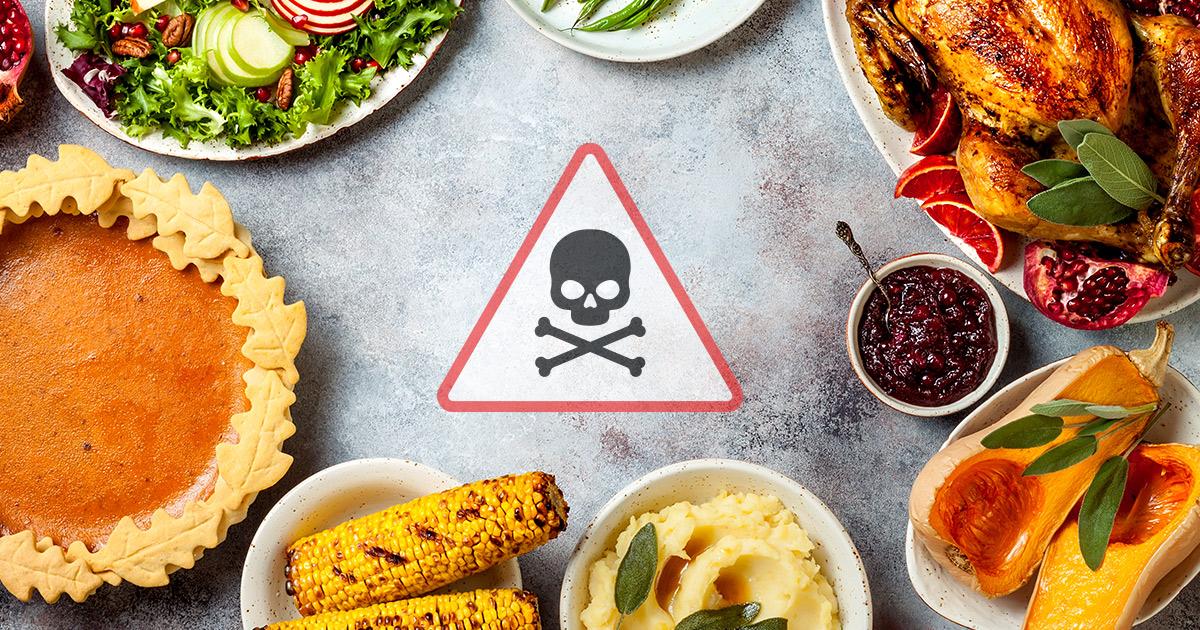
It's officially the holiday season, which means supermarkets across the country are stocking up on American menu essentials like gravy, cranberry sauce, stuffing, and of course, turkeys. Although there's no harm in participating in the annual feast of calorie-dense comfort foods, mass production of quick and easy, processed food staples comes with a price: toxic additives.
Many of our favorite holiday dishes are laden with preservatives and less-than-ideal ingredients (we're looking at you, high-fructose corn syrup). Unless you're open to cooking many of these classic, albeit time-consuming dishes from scratch, it may be best to nix the boxed stuffing for healthier alternatives.
Learn about the season's most notorious sides and tips for planning your holiday meals without uninvited guests like BPA, artificial preservatives, and antibiotic residues.
1. Canned Cranberry Sauce
An essential side for almost any Thanksgiving table, many opt for the ease and convenience of canned cranberry sauce. While this shaves some time off your meal prep, it could also add a dose of BPA.
Bisphenol A, most commonly known as BPA, is used in cans as a protective lining between metal and food. While the FDA argues that it's safe to apply to food packaging, scientific research disagrees, citing that BPA is linked to negative impacts on the body's hormones, as well as acting as an obesogenic chemical, meaning it can contribute to weight gain (1).
Here's a simple cranberry sauce recipe that will brighten your dinner plate, sans BPA.
2. Jarred Gravy
That consistently tasty and easy to use jarred gravy on your grocery store shelf may not be such a great addition to your meal this year, or any year. Trans fats and sodium benzoate are common in processed foods across the spectrum, but they are most often used in sauces, dressings, and marinades to improve consistency and keep products shelf stable.
While sodium benzoate may extend the shelf life of processed foods, that's not the case for people, as research shows it generates oxidative stress, and research links the preservative with a multitude of health issues, including adverse effects on the immune system, liver, kidneys, and fertility (2).
Trans fats, on the other hand, are linked to higher risk for cardiovascular disease, fatty liver and diabetes (3, 4).
If you'd rather not risk a broken gravy due to subpar culinary skills, try a premade gravy brand that's USDA organic such as Primal Kitchen or Simply Organic.
3. Boxed Stuffing
A staple on many holiday dinner tables is stuffing. The quintessential red box of pre-seasoned stuffing mix is both nostalgic and a quick addition to a meal. However, boxed stuffing is also hiding nefarious additives: BHA and BHT. These additives, butylated hydroxyanisole and butylated hydroxytoluene, are used as preservatives to keep fats and oils fresh, or in plastic or wax liners on food packaging.
There is evidence that residual dust from these preservatives ends up in food, as well as laboratory research pointing to links between BHT and liver cell damage, along with other health effects (5).
While BHA and BHT are added during processing, another problematic ingredient hiding in products made with non-organic wheat is glyphosate. This pesticide, otherwise known as RoundUp, is associated with gluten-intolerance, digestive problems, anxiety, depression, and more.
Not all boxed stuffing is bad. For a time-saving shortcut, choose USDA organic stuffing mixes which are free of artificial ingredients and toxic additives.
4. Ultra-Processed Desserts
You may peruse the freezer aisle to scope out a sweet treat to serve post-turkey, but heed caution: many of these sweet and creamy desserts include additives like carrageenan, high-fructose corn syrup, and artificial dyes.
Carrageenan is a chemical compound derived from red seaweed and applied to foodstuffs for gelling, thickening and stabilizing properties. Despite the additive originating from a natural, edible source, in its chemical form, animal research on carrageenan noted increased risks for intestinal inflammation (6). Human studies on carrageenan also point to a variety of digestive tract issues, due to its inflammatory effect on the gut (7).
While carrageenan is a problematic ingredient, high-fructose corn syrup and artificial dyes are common ingredients in processed foods like frozen desserts. High-fructose corn syrup is associated with an increased risk of obesity, and artificial dyes are linked to adverse behavioral outcomes in children (8, 9).
If you're dead-set on a dessert spread, head to a local bakery that you know opts for natural ingredients that are free of artificial dyes and preservatives.
5. Non-Organic Meats
On many occasions, a turkey or a roast takes center stage on your holiday dinner table. Whether your family prefers a London Broil or a basted turkey, selecting your meat products is just as important as any other dish.
Due to large-scale factory farming, antibiotics are typically administered to animals. Since these antibiotics end up in animals' food or water, they therefore are part of the meat that humans consume. According to the FDA, approximately 24,481,963 pounds of antibiotics were approved for use in food producing animals in 2021, and 1,453,796 pounds was specifically allocated for turkeys (10).
The problem is that consistent administration of antibiotics leads to antibiotic-resistant bacteria. Once resistant bacteria are released into the environment, they can ultimately contribute to antibiotic-resistant infections in people.
Furthermore, animals may also be treated with hormones, given feed that's been treated with pesticides, and during processing, the meat itself may have added preservatives, chemical flavors and colorings, all of which is passed onto the consumer.
To circumvent exposure to antibiotics, hormones, or preservatives, it's best to shop for USDA organic, antibiotic-free, or pasture-raised meats. An ideal solution is finding a local farmer that you trust and buying your meats directly from the source.
The Bottom Line
Although it may be scary to learn about all the potential for harm in our everyday environment, especially our food sources, there are plenty of steps to take to minimize exposure to chemicals and toxins. By avoiding ultra-processed, packaged foods for whole food alternatives we are already taking a giant leap towards healthier living. Investing your time towards home cooking can produce benefits far beyond delicious meals, but also reduce your exposure to harmful chemicals and toxins.
This year, when you are doing your holiday shopping, try as best as possible to opt for organic foods at the grocery store, and if you have the time, skip the pre-packaged sides for homemade alternatives. As long as it's organic, you can still have your cake AND eat it, too!
Shop this Article
Recent Articles

11 Vitamins & Minerals Women Need
Hibiscus Mojito Detox Mocktail
7 Simple Ways to Enhance Your Detox

3 Big Ways Telomeres Impact Mitochondria
9 Foods to Stimulate GLP-1 Naturally
Use HSA/FSA for Your Favorite Detox Supplements
5 Dangers of Supplement Dupes

A Letter of Thanks From Our Founder

The Ultimate 2025 Holiday Gift Guide

9 Biohacking Tips for Longevity
Recent Articles
11 Vitamins & Minerals Women Need
Hibiscus Mojito Detox Mocktail
7 Simple Ways to Enhance Your Detox
3 Big Ways Telomeres Impact Mitochondria
9 Foods to Stimulate GLP-1 Naturally
Use HSA/FSA for Your Favorite Detox Supplements
A Letter of Thanks From Our Founder
The Ultimate 2025 Holiday Gift Guide
9 Biohacking Tips for Longevity